This article has been written by RCS UK

Residential Solar: Is It Worth It for UK Homeowners?

RCS UK • 3 September 2026

What Affects Your Residential Solar Savings

1. Roof Size and Orientation

South-facing roofs typically generate the most electricity, but east- and west-facing roofs can still perform well — especially for households that use power throughout the day rather than mostly in the evening.

2. Household Energy Usage

Homes where someone is present during the day (working from home, family activities) tend to see faster savings, since that's when solar panels are actively generating power.

3. System Size and Battery Storage

Larger systems generate more electricity but cost more upfront. Adding battery storage lets you store unused daytime power for evening use, maximising overall savings — particularly useful for households away during the day.

4. No Upfront Cost Options

Similar to commercial properties, homeowners can access finance plans where a partner company covers the full cost of equipment and installation, and you pay a fixed rate for the power generated instead.

5. Getting Started

A free assessment is the best way to understand your home's real solar potential — covering roof condition, orientation, and expected savings based on your household's actual usage.

  • Do I need a battery storage system, or can I get by with just solar panels?

    While you don't strictly need a battery, adding one significantly increases your savings—especially if your household is empty during the day. A battery stores excess electricity generated during peak sunlight hours so you can use it in the evening, rather than sending it back to the grid or buying power later at night.

  • What happens to my solar panels on cloudy or rainy days in the UK?

    Solar panels still generate electricity on cloudy days, though at a reduced output (typically around 10% to 25% of their peak capacity). Because the UK experiences variable weather, modern systems are designed to capture diffuse daylight efficiently, meaning you will still see generation throughout the year.

  • How long do residential solar panels last, and do they require much maintenance?

    Most quality solar panels come with a performance warranty of 25 years, and they often continue producing power well beyond that. Maintenance is generally minimal—they have no moving parts and usually just require an occasional clean or a routine check to ensure they remain unobstructed.

  • Can I really get solar panels with no upfront installation costs?

    Yes. Similar to commercial setups, some residential finance providers offer options where they cover the equipment and installation costs entirely. In return, you typically enter into an agreement where you pay a fixed, predictable rate for the clean energy your system generates.

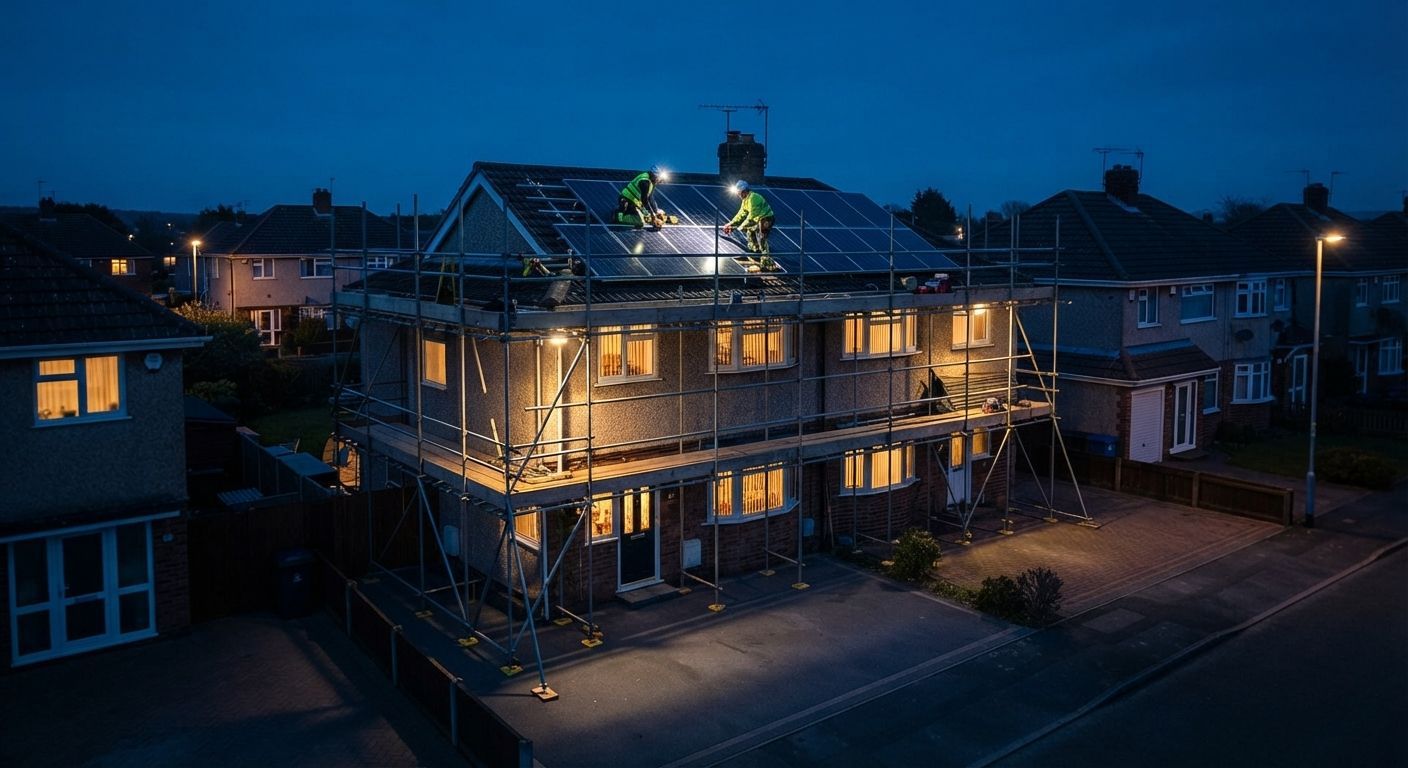
Solar panel installation on a UK home under renovation at night
by RCS UK 4 September 2026
Wondering why scaffolding matters for solar installation? Discover how in-house scaffolding improves safety, timelines, and project quality.
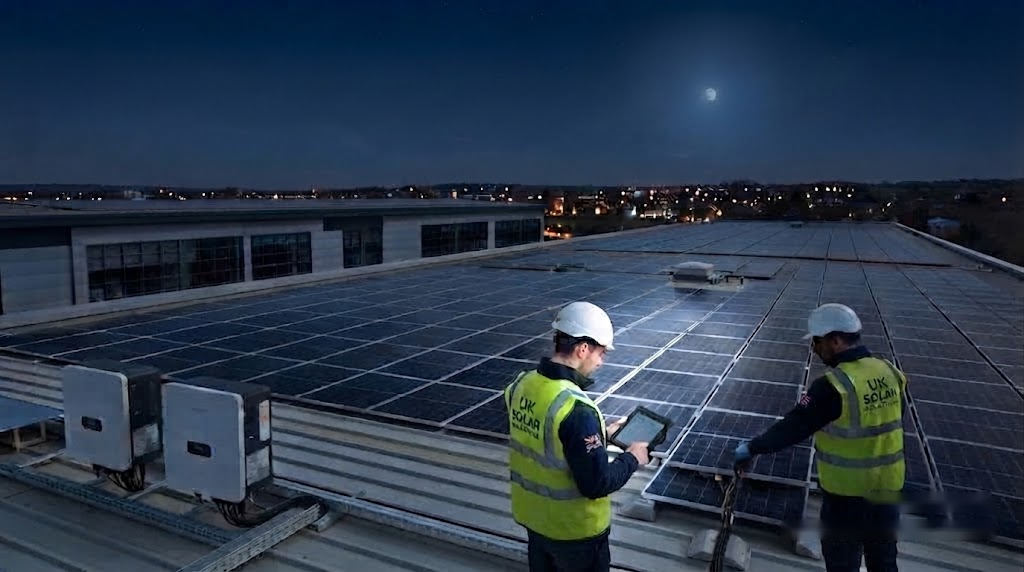
Solar technicians inspecting rooftop solar panels at night
by RCS Uk 3 September 2026
Description: Thinking about commercial solar for your business? Discover real savings, finance options, and what to expect before switching to solar.

RELATED POSTS

Solar panel installation on a UK home under renovation at night
by RCS UK 4 September 2026
Wondering why scaffolding matters for solar installation? Discover how in-house scaffolding improves safety, timelines, and project quality.
Solar technicians inspecting rooftop solar panels at night
by RCS Uk 3 September 2026
Description: Thinking about commercial solar for your business? Discover real savings, finance options, and what to expect before switching to solar.